Meme coin trading can turn a small stake into six figures when you treat it as a high-risk game of narratives, timing, and strict risk control
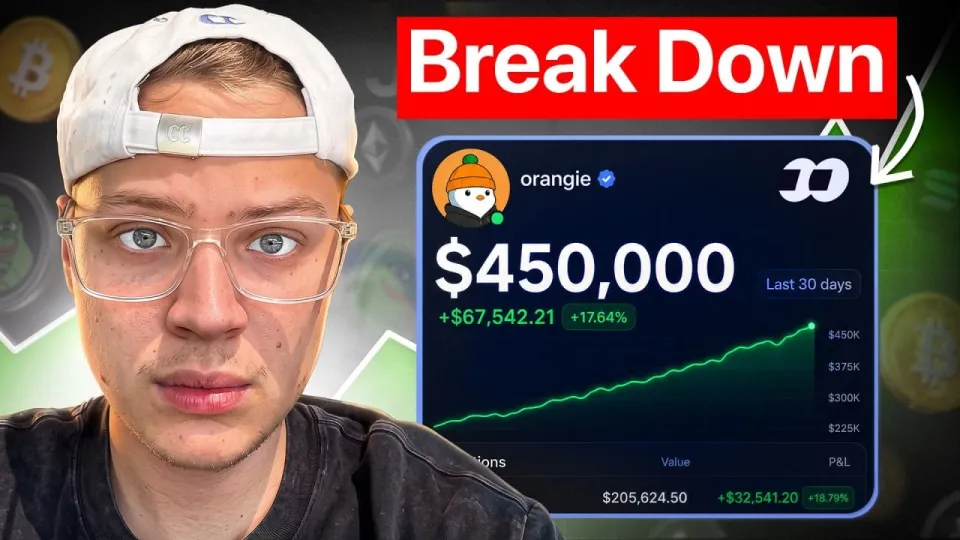
Video: How I Made $450,000 Trading Memecoins in 30 Days
Want articles like this for your own video to promote it on YouTube and Google? Order them through the Telegram bot @sat_sit_bot. The bot writes and publishes the articles itself (with your YouTube video embedded) on popular topical websites (no ads). Try it free: 50 articles on us.
· based on the channel Orangie Web3
Meme coin trading is the practice of buying and selling tokens built around internet jokes, trends, or communities, often on Solana, where low fees and fast confirmation allow rapid entries and exits. The promise is huge percentage gains in days; the reality is that most participants lose money, and the $450,000-in-30-days result shown by Orangie Web3 is an outlier, not a baseline. If you want to explore the tools and community the video points to, the Kaizen Group checkout is the first link in the description.
What a meme coin actually is and why Solana became its home
A meme coin is a cryptocurrency with no cash-flow claim; its price is driven almost entirely by attention, community, and the expectation that someone else will pay more later. Dogecoin is the original example, but the modern wave runs on Solana because transactions cost fractions of a cent and confirm in seconds, which matters when a token can move 50% in minutes. That speed cuts both ways: it makes it cheap to chase a narrative and equally cheap for early holders to dump on you. The video's $450,000 figure over 30 days comes from this environment, where a handful of trades can dominate the year's result.
How the $450,000 result is framed and what it hides
The headline number is a marketing hook, and the useful part is the process behind it, not the total. In the video, the trader walks through entries and exits on fast-moving Solana tokens, which matches what viewers ask for in the comments: explain why a coin was chosen, where the entry was, and where the exit was. What the number hides is the base rate. A single 3x or 10x hit often follows several positions that go to near zero, and one commenter describes losing about 90% of a $100 stake before catching a 3x on a token called AMC. Treat the $450,000 as a case study in asymmetric bets, not as an expected return.
The mechanics of a meme coin trade from wallet to exit
Every meme coin trade follows the same basic steps, and the difference between profit and loss usually sits in steps 3 and 5.
- Set up a self-custody wallet and fund it with SOL; keep a separate small "risk" balance so a bad week can't touch savings.
- Find the token contract from a reliable source, not from a random reply, and check that liquidity is locked or burned and that the holder list isn't dominated by one wallet.
- Size the position before you buy: decide the maximum you can lose entirely, because a meme coin can go to zero without warning.
- Enter early in a narrative or after a clean consolidation, not in the middle of a vertical candle driven by a single influencer.
- Set a plan for taking profit in tranches and for cutting the position if the thesis breaks; the video's emphasis on explaining exits is the most transferable lesson.
Tools and communities that shape the odds
Meme coin trading is partly an information game, and the video's description points to a trading platform and a private Discord, which is consistent with how the market works. A platform like FOMO (linked as fomo.family/r/orangie) aggregates early token data, while Discord groups share calls and sometimes coordinate entries. One of the most-liked comments on the video argues that top traders sit in the same groups and snipe the coins they call together, which is a fair warning: if you are not in the group, you may be the exit liquidity. Use these tools to shorten research time, not to outsource judgment.
Common viewer questions about speed, losses, and learning
Viewers repeatedly ask whether the pace is too fast and whether losing most of a small stake means they should quit. The honest answer is that speed is a personal setting: pause and rewatch, but don't skip the risk rules. Another recurring theme is starting with very little money, such as $100, and losing most of it; that is a normal tuition payment in this market, and the traders who survive are the ones who keep position sizes small enough to take several such hits. A third question is how to choose between tokens; the video's approach of reviewing each trade's entry, exit, and reason is more useful than chasing the loudest call. Finally, many ask about "graduated" coins, meaning tokens that have completed a bonding curve and listed on a larger venue; these can be less chaotic but also offer smaller multiples.
Risk rules that keep a meme coin run alive
The only way a $450,000 month is possible is by surviving the months that aren't, and that comes down to rules rather than prediction. Cap any single position at a small percentage of your trading capital, take initial capital out after a strong move, and never add to a loser hoping for a bounce. Expect to lose on most trades: the model is many small losses and a few large wins, so a 90% drawdown on one $100 experiment is acceptable only if it doesn't change your life. Avoid leverage and borrowed money, and remember that liquidity can vanish exactly when you want to sell.
Useful links
- Kaizen Group checkout — the paid community link from the video description.
- FOMO trading platform — the platform referenced for tracking and trading meme coins.
- Orangie Discord — the public community server.
- Orangie on Instagram — short-form updates.
Final takeaway
The $450,000 figure is a useful story about asymmetric bets, not a promise, and the real lesson is process: small position sizes, fast research, planned exits, and the expectation that most trades lose. Orangie Web3 presents this as a high-risk game, and the comments show both the excitement and the losses that come with it. If you want the tools and community behind the video, start with the Kaizen Group checkout and treat any capital you commit as money you can afford to lose entirely.
Key takeaways
- A $450,000 gain in 30 days is presented as an outlier result, not a typical outcome.
- Most meme coin traders lose money; the video frames big wins as rare hits that follow many small losses.
- Solana's low fees and fast confirmation make it the main venue for meme coin launches.
- Tools like FOMO and private Discord groups are shown as ways to spot early narratives.
- Risk rules matter more than picks: size positions so a total loss doesn't end your run.
Source: How I Made $450,000 Trading Memecoins in 30 Days · Markdown version
Questions & answers
Is it realistic to make $450,000 in 30 days trading meme coins?
No, that result is an outlier and should not be treated as a target. Most meme coin traders lose money, and large gains usually follow many small losses. The video presents the number as a case study in asymmetric bets, not as an expected return.
Why do most meme coin trades happen on Solana?
Solana offers very low transaction fees and fast confirmation times, which makes it practical to enter and exit positions quickly. That speed is essential when a token can move double digits in minutes, but it also makes it easy for early holders to sell into new buyers.
How much should I risk on a single meme coin?
Only an amount you can afford to lose entirely, and typically a small percentage of your trading capital per position. The model is many small losses and a few large wins, so position sizing matters more than picking the right coin.
What do tools like FOMO and private Discord groups actually provide?
They shorten research time by aggregating early token data and sharing calls, but they do not replace your own judgment. Being outside a coordinated group can mean you are the exit liquidity, so use these tools as inputs, not as instructions.